

Condition Guide
Fungal Toenails
Discolored, thickened nails caused by fungal infection, treated with laser and medication.
01Overview
Onychomycosis (fungal nail infection) is the most common nail disorder in adults, estimated to affect 10% of the general population and up to 50% of individuals over 70 years of age. It is a chronic, progressive infection of the nail unit - including the nail plate, nail bed, and nail matrix - by pathogenic fungi. Left untreated, onychomycosis rarely resolves on its own and tends to worsen over time, spreading to adjacent nails and causing permanent nail damage. Beyond cosmetic concerns, it can be a source of pain, impair daily activities, and serve as a portal of entry for bacterial infections - particularly in diabetic or immunocompromised patients.
02Causes & Etiology
The vast majority of onychomycosis cases (80-90%) are caused by dermatophyte fungi, most commonly Trichophyton rubrum and Trichophyton mentagrophytes. These fungi are uniquely adapted to digest keratin, the structural protein of the nail, and can survive in the nail unit for years. The remaining cases are caused by non-dermatophyte molds (Scopulariopsis brevicaulis, Fusarium spp.) and yeasts (Candida albicans), the latter more commonly affecting fingernails or patients who are immunosuppressed. Infection typically begins at the distal free edge or lateral nail fold and progresses proximally as the fungi digest the nail plate and underlying nail bed. The infection frequently co-exists with tinea pedis (athlete's foot), which serves as a reservoir for repeated auto-inoculation.
Risk Factors
- Older age (thicker, slower-growing nails; reduced circulation)
- Tinea pedis (athlete's foot) - the most common preceding infection
- Diabetes mellitus and peripheral vascular disease
- Nail trauma or damage (repetitive microtrauma from ill-fitting shoes)
- Wearing occlusive footwear (reduced ventilation, warm moist environment)
- Walking barefoot in communal areas
- Immunosuppression (HIV, chemotherapy, corticosteroid use)
- Family history (genetic susceptibility to dermatophyte infection)
- Male sex (more prevalent in men)
03Signs & Symptoms
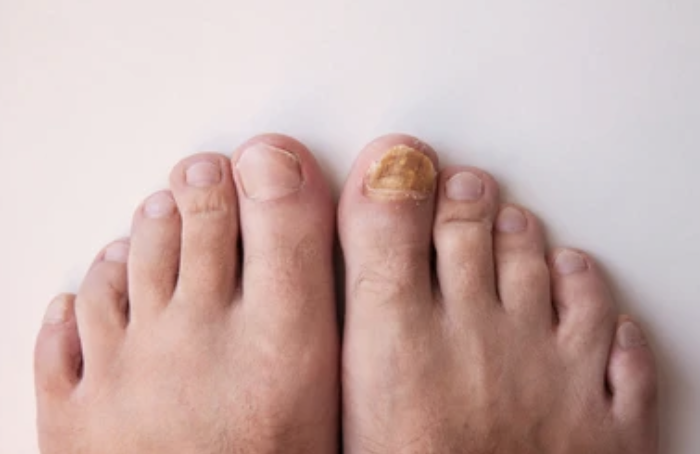
- Nail discoloration - yellow, brown, white, or black depending on organism and infection pattern
- Thickened and distorted nail plate (onychauxis)
- Brittle, crumbly, or ragged nail edges
- Accumulation of chalky debris under the nail (subungual hyperkeratosis)
- Separation of the nail from the nail bed (onycholysis)
- Mild to moderate odor from the infected nail
- Pain or discomfort when wearing shoes or during activity in advanced cases
- Spread of infection to adjacent nails over time
When to See Dr. Golan
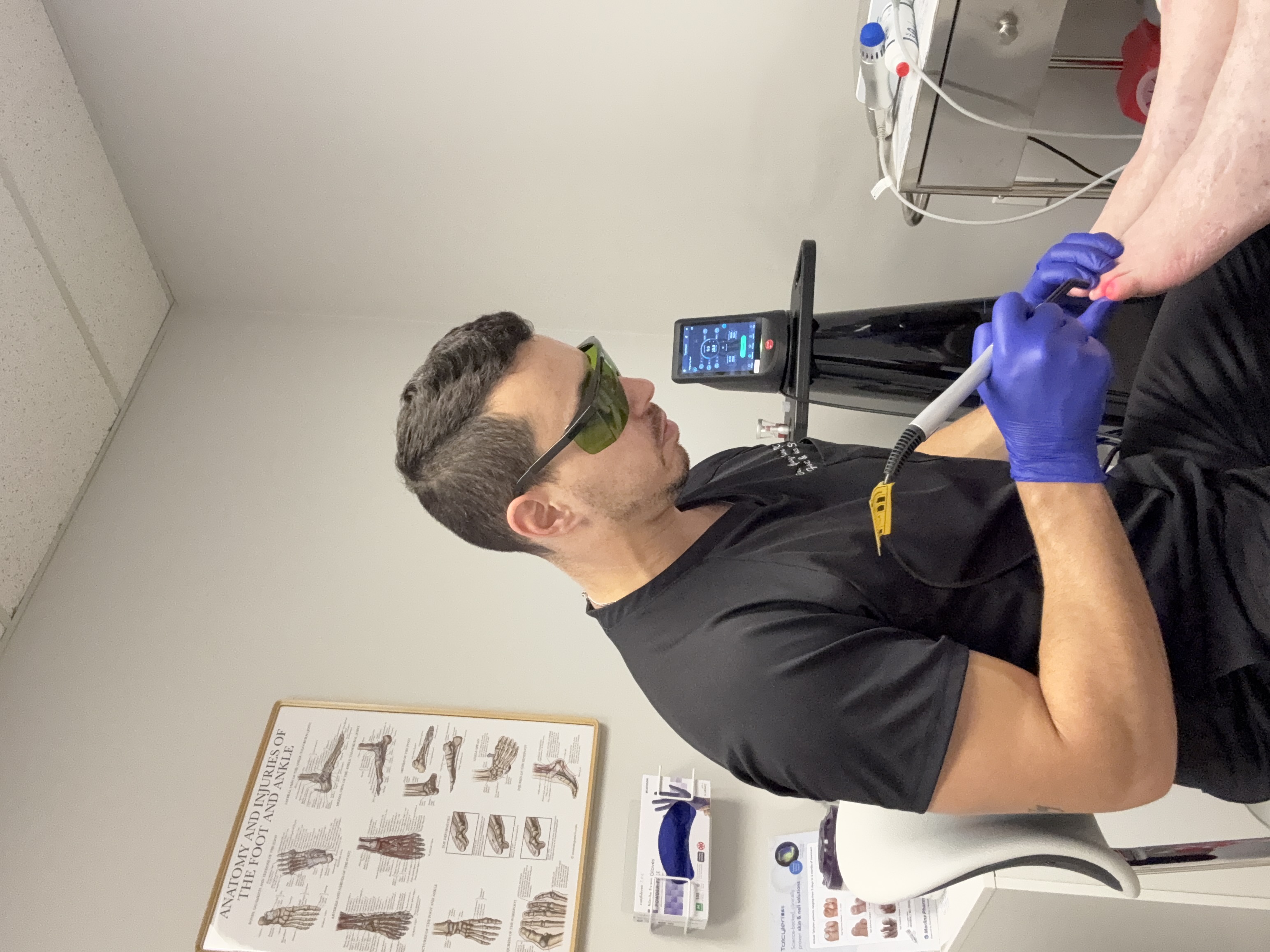
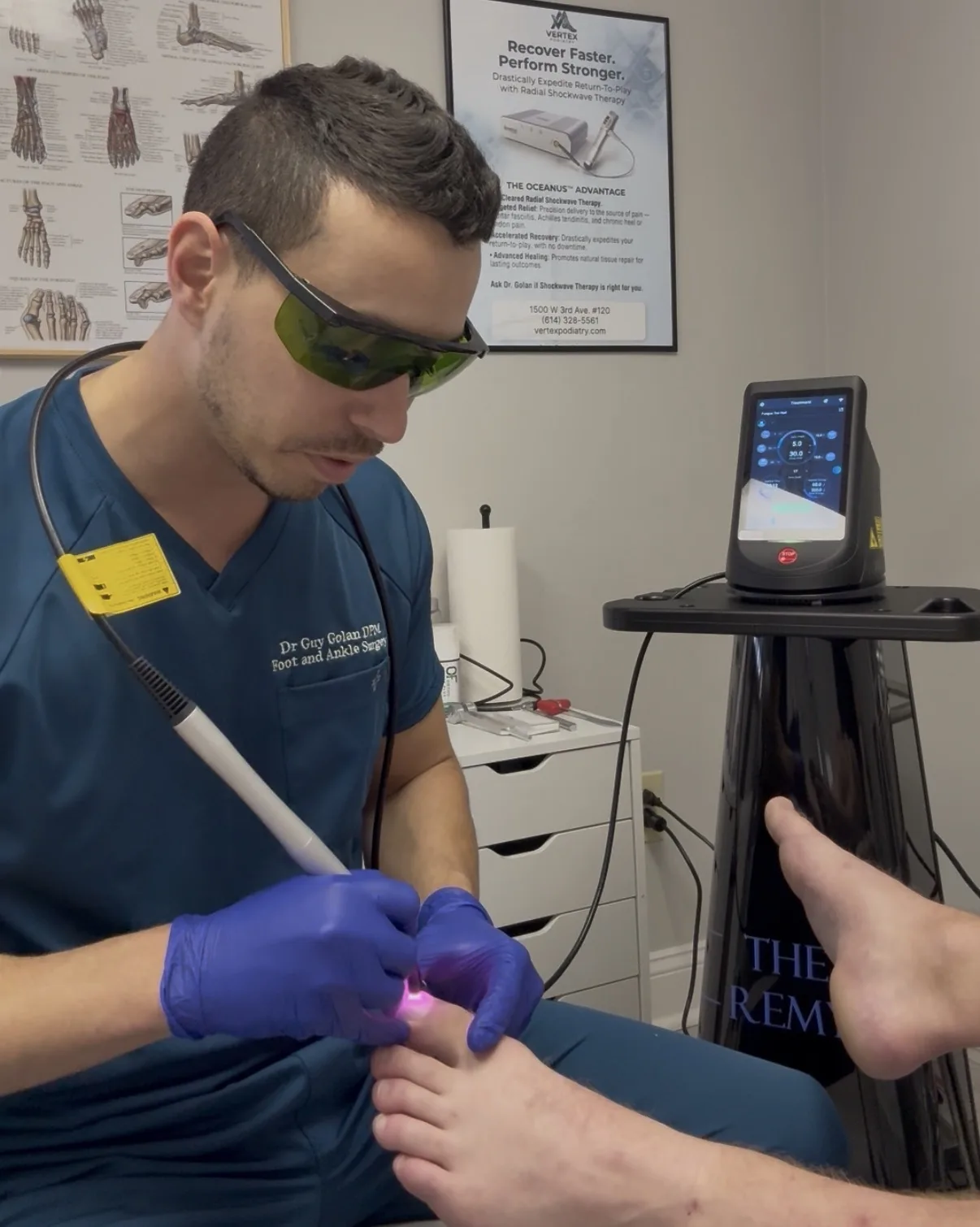
If you notice nail discoloration, thickening, or crumbling that is not resolving, early evaluation and treatment will prevent the infection from progressing and spreading. Podiatric care offers both oral antifungal therapy and laser treatment - a safe, medication-free option that targets the fungus directly within the nail unit.
Treatment Program
Vertex Elite Clear Nail Package
A structured 6-session REMY Class IV laser program - 3-phase clinical protocol, home-care kit, and CareCredit financing available.
04Frequently Asked Questions
Ready to find relief?
Schedule a consultation with Dr. Golan and get a personalized treatment plan.
Book an AppointmentFrom Our Blog
Fungal Toenails: Why Over-the-Counter Treatments Often Fail - and What Actually Works
4 min read
Class 4 Diode Laser for Fungal Toenails: Success Rates, No Pills, No Pain
9 min read
Vertex Elite Clear Nail Package: A 6-Session Laser Plan for Fungal Nails
6 min read
Fungal Toenails Treatment Near You
Select your community for local context, city-specific FAQs, and drive times to our Grandview Heights office.
Patient Resources