

Condition Guide
Arthritis of the Foot & Ankle
Management of joint inflammation causing stiffness, swelling, and limited mobility.
01Overview
The foot and ankle contain 33 joints - more than any other region of comparable size in the body - making them common and impactful sites for arthritic disease. Arthritis of the foot and ankle encompasses several distinct conditions united by the feature of joint inflammation and progressive joint damage, but differing substantially in their underlying mechanisms and patterns of involvement. Osteoarthritis, post-traumatic arthritis, rheumatoid arthritis, gout, and psoriatic arthritis are the forms most frequently encountered in podiatric practice. Regardless of type, foot and ankle arthritis can profoundly limit mobility, independence, and quality of life.
02Causes & Etiology
Osteoarthritis (OA) of the foot and ankle is primarily a mechanical disorder: sustained or cumulative loading - whether from normal daily activity over decades, obesity, or biomechanical malalignment - degrades articular cartilage faster than it can regenerate. The great toe MTP joint (hallux rigidus) and the first tarsometatarsal joint are common OA targets. Post-traumatic arthritis develops as a late consequence of prior fracture, dislocation, or ligamentous injury that has altered joint congruity or injured the articular cartilage directly. Rheumatoid arthritis (RA) is an autoimmune condition driven by synovial inflammation (synovitis), which erodes cartilage and periarticular bone through cytokine-mediated pathways - the forefoot is affected in over 90% of RA patients, with forefoot spread, hallux valgus, and metatarsalgia being characteristic findings. Gout results from deposition of monosodium urate crystals in joint spaces and periarticular tissues, producing acute attacks of exquisitely painful inflammation. The first MTP joint is the most classic site (podagra).
Risk Factors
- Older age (OA risk increases substantially after 50)
- Prior joint injury - fracture, sprain, or dislocation (post-traumatic arthritis)
- Obesity (elevated mechanical load on weight-bearing joints)
- Autoimmune disease (rheumatoid arthritis, psoriatic arthritis, lupus)
- Elevated uric acid levels and purine-rich diet (gout)
- Genetic predisposition to OA or inflammatory arthritis
- Prolonged occupational or athletic joint loading
- Adjacent foot deformity altering joint mechanics
03Signs & Symptoms
- Joint pain that worsens with activity and improves with rest (OA); or pain and stiffness worse in the morning and after inactivity (RA)
- Swelling, warmth, and redness of one or more joints
- Stiffness and reduced range of motion, particularly noticeable after periods of rest
- A grinding or crunching sensation (crepitus) within the joint during movement
- Progressive joint deformity (hallux rigidus, claw toes, or forefoot splaying)
- In gout: sudden, intense attacks of severe pain, redness, and swelling - often overnight
- Difficulty walking, climbing stairs, or wearing standard footwear
When to See Dr. Golan
Persistent joint pain, swelling, or stiffness in the foot or ankle - even if mild - warrants evaluation to establish the type of arthritis and initiate appropriate treatment. Early intervention can slow joint damage, preserve function, and significantly improve quality of life.
04Frequently Asked Questions
Ready to find relief?
Schedule a consultation with Dr. Golan and get a personalized treatment plan.
Book an AppointmentFrom Our Blog

How Custom Orthotics Can Relieve Pain and Improve Your Quality of Life
4 min read
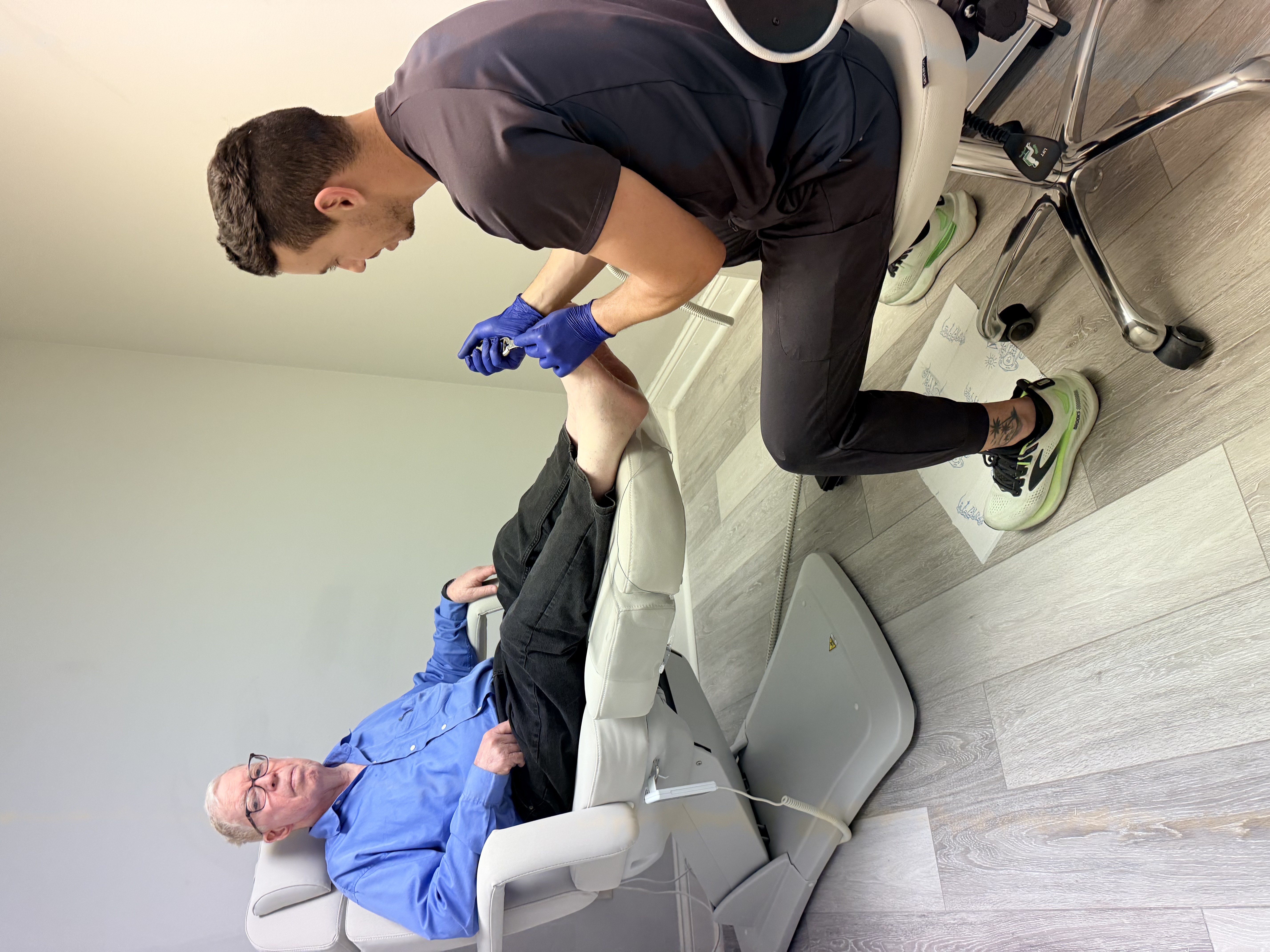
Your Feet at 60, 70, and Beyond: What Changes and What You Can Do About It
9 min read

The Podiatrist's Complete Guide to Proper Footwear: What to Wear, What to Avoid, and the Truth About High Heels and Bunions
10 min read
Arthritis of the Foot & Ankle Treatment Near You
Select your community for local context, city-specific FAQs, and drive times to our Grandview Heights office.
Patient Resources