
Treatment Guide
Amniotic Injections
Regenerative therapy using amniotic tissue to stimulate healing in tendons, joints, and damaged tissue.
Overview
Amniotic tissue injections represent one of the most exciting frontiers in regenerative podiatric medicine. Dr. Golan uses Clarix FLO - a sterile, micronized amniotic membrane and umbilical cord allograft manufactured by BioTissue Surgical - as his preferred amniotic product. Clarix FLO contains a rich concentration of growth factors, cytokines, hyaluronic acid, collagen, and extracellular matrix proteins that collectively orchestrate the body's natural healing response. When injected into a site of chronic injury or degeneration, these biologics signal the body's own repair mechanisms - stimulating collagen production, reducing scar tissue formation, modulating inflammation, and promoting tissue regeneration. Unlike platelet-rich plasma (PRP), amniotic products are allograft-based, meaning they are derived from donated placental tissue from healthy live C-section deliveries, processed under strict FDA guidelines. They are acellular - meaning they contain no living donor cells - which eliminates rejection risk. Dr. Golan uses Clarix FLO for chronic tendinopathy, plantar fasciitis resistant to other treatments, joint degeneration, and post-surgical healing support.
Benefits
- Clarix FLO by BioTissue Surgical - a proven, FDA-compliant amniotic membrane and umbilical cord allograft
- Harnesses the body's natural regenerative signaling pathways
- Anti-inflammatory and anti-fibrotic - reduces scar tissue and promotes healthy healing
- Rich in growth factors including TGF-β, EGF, and PDGF - key orchestrators of tissue repair
- No rejection risk - acellular allograft; zero disease transmission events in 680,000+ procedures
- No downtime - outpatient in-office injection, often ultrasound-guided for precision
- Effective alternative to repeated cortisone injections without the tissue-damaging side effects
- May delay or eliminate the need for surgery in select patients
What to Expect
Amniotic injections are performed in-office in a manner similar to cortisone injections. The target site is identified using anatomical landmarks or ultrasound guidance for precision. The injection itself takes only a few minutes. Mild soreness or swelling at the injection site for 24-48 hours is common. Unlike cortisone - which provides fast but potentially temporary relief - amniotic products work over weeks to months as the growth factors stimulate tissue regeneration. Most patients notice progressive improvement over 4-12 weeks. A single injection is often sufficient, but a series of 2-3 may be recommended for more advanced cases. Dr. Golan will discuss realistic expectations and timeline based on your specific condition.
Who Is a Candidate?
Amniotic injections are most beneficial for patients with chronic plantar fasciitis, Achilles tendinopathy, retrocalcaneal bursitis, degenerative joint disease, and other conditions involving chronic tissue breakdown that have not responded to conservative care including physical therapy, orthotics, and cortisone. They are an excellent option for patients seeking to avoid surgery or for those who are not surgical candidates.
Frequently Asked Questions
Is there a risk of rejection or disease transmission?
No. Amniotic allografts are acellular - all donor cells are removed during processing. They undergo rigorous testing and sterilization under FDA guidelines, making the risk of rejection or disease transmission extremely low.
How does this differ from PRP?
Platelet-rich plasma (PRP) is derived from your own blood and concentrates growth factors from your platelets. Amniotic products contain a broader array of growth factors and regenerative proteins from placental tissue. Both are regenerative approaches; Dr. Golan will discuss which is most appropriate for your condition.
Will insurance cover amniotic injections?
Coverage varies significantly by payer. Many insurance plans do not yet cover amniotic injections. We will provide a detailed breakdown of costs and explore all available options during your consultation.
From Our Blog
Cortisone vs. Regenerative Therapy for Heel Pain: Which Is Right for You?
6 min read
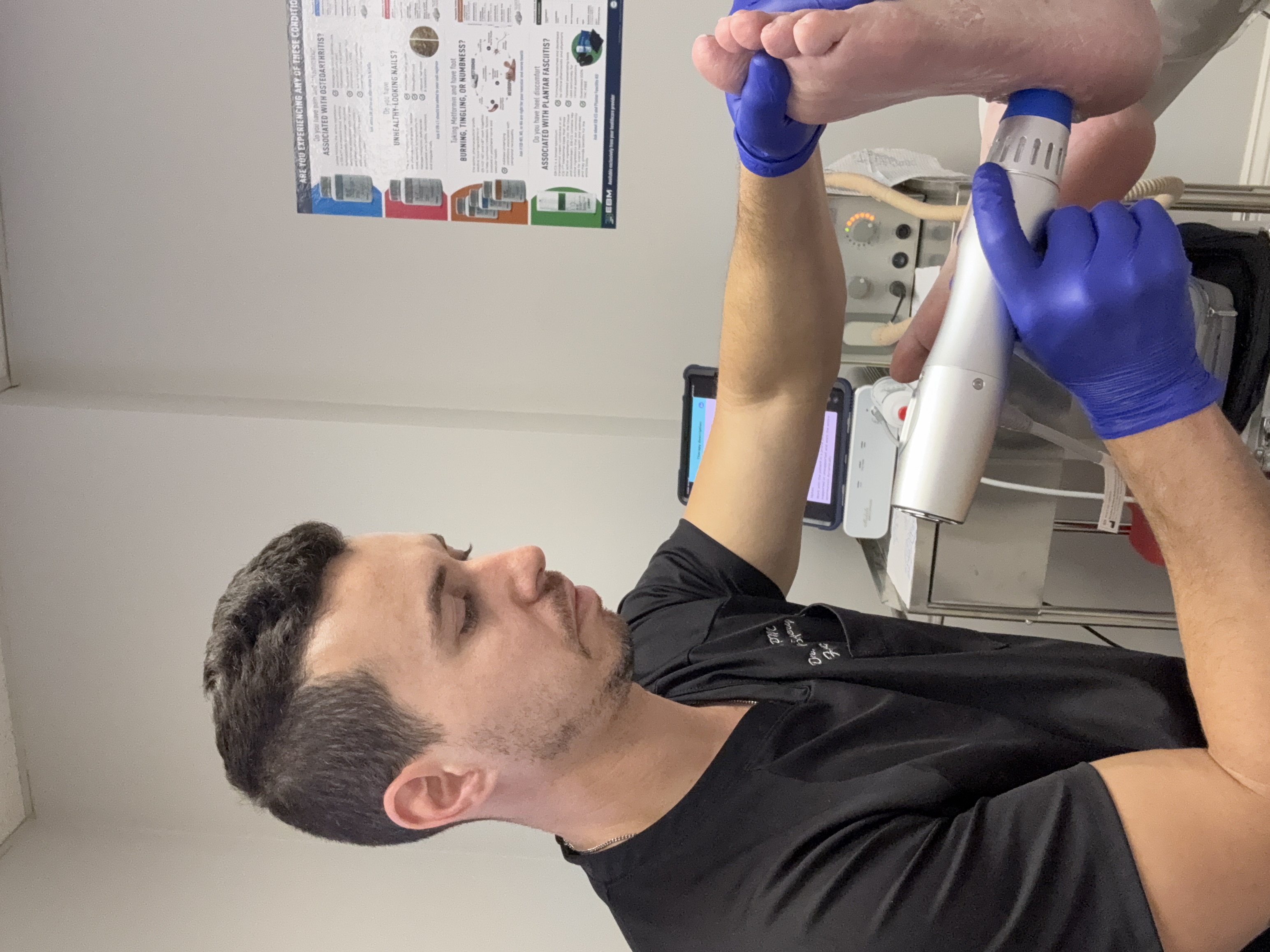
Shockwave Therapy for Achilles Tendinitis, Thick Plantar Fascia & Surgical Scar Tissue - No Needles, No Surgery, No Downtime
7 min read

Achilles Tendinitis: Can It Heal Without Surgery? A Columbus Podiatrist Explains
6 min read
Clinical Research
The following published studies and clinical case reports support the use of amniotic tissue injections for the conditions treated at Vertex Podiatry.
Cryopreserved Human Amniotic Membrane Injection for Plantar Fasciitis: A Randomized, Controlled, Double-Blind Pilot Study
Hanselman AE, Tidwell JE, Santrock RD
In this Level I randomized controlled trial, cryopreserved human amniotic membrane (c-hAM) injection was found to be safe and comparable to corticosteroid injection for plantar fasciitis. Patients in the two-injection cohort who received c-hAM demonstrated significantly greater foot pain improvement at 18 weeks (P = .0113) compared to those who received corticosteroid - suggesting a more durable regenerative effect over time.
CLARIX® FLO for Achilles Tendinopathy and Partial Tear
Altchuler D, DPM
A 58-year-old patient with MRI-confirmed acute-on-chronic Achilles tendonitis and a longitudinal interstitial mid-tendon split tear affecting 20% of the cross-sectional area received a single ultrasound-guided injection of Clarix FLO (amniotic membrane and umbilical cord particulate). By 33 days, repeat MRI showed measurable reduction in tendinopathy and the tear had decreased to affect only 10% of the cross-sectional area. At 4 months post-injection, ultrasound examination revealed complete repair of the Achilles tendon.
Amniotic Membrane Allograft for Plantar Fasciitis and Tendinosis
Garras D, Scott R
Clinical data presented at the AOFAS Annual Meeting demonstrated the efficacy of Clarix FLO (micronized amniotic membrane allograft) for plantar fasciitis and joint tendinosis. The data supported its use as an in-office injectable alternative to corticosteroids, with outcomes that benefit both symptom relief and underlying tissue healing.
Intra-articular Amniotic Membrane and Umbilical Cord Particulate for Pain Management
Castellanos R, Tighe S
In a representative case of chronic knee osteoarthritis, a 76-year-old male with type 1 diabetes, hypertension, and prior treatment failure received a single injection of 50 mg Clarix FLO reconstituted in 3 cc saline under live ultrasound guidance. Pain scores decreased from 9/10 at presentation to 7/10 at 6 weeks, 5/10 at 12 weeks, and 2/10 at 6 months - representing a near-complete resolution of pain that had resisted all prior interventions.
BioTissue Surgical - Patient Resources
Ready to get started?
Schedule a consultation with Dr. Golan to find out if amniotic injections is the right treatment for you.
Book a ConsultationPatient Resources