

Key Takeaways
- Diabetes damages the nerves and blood vessels in the feet, making footwear one of the most important daily health decisions a diabetic patient makes
- Medicare Part B covers one pair of diabetic shoes (depth-inlay or custom-molded) plus three pairs of inserts per calendar year for qualifying patients
- A podiatrist can prescribe therapeutic footwear - no separate referral required
- Anodyne therapeutic shoes offer stylish, everyday-looking designs with the protective features diabetic feet actually need
- Proper diabetic footwear reduces the risk of foot ulcers, infections, and amputations - the leading causes of non-traumatic limb loss in the U.S.
- Dr. Golan prescribes and fits diabetic shoes at Vertex Podiatry in Grandview Heights, Columbus
When people think about managing diabetes, they think about blood sugar, diet, insulin, and medications. Footwear rarely makes the list - and that gap in awareness causes real harm. For a patient with diabetic neuropathy, the wrong shoe can start a cascade that ends in hospitalization or amputation. For a patient with the right shoe, that chain of events never begins.
At Vertex Podiatry, Dr. Guy Golan prescribes therapeutic diabetic footwear as part of comprehensive diabetic foot care. Medicare covers this benefit annually for qualifying patients, and the shoes available today - including the Anodyne therapeutic line - look nothing like the clunky, clinical footwear most people picture when they hear "diabetic shoes."
Why Diabetic Feet Need Different Shoes
Diabetes causes two conditions that converge in the feet to create serious risk: peripheral neuropathy (nerve damage that eliminates protective sensation) and peripheral arterial disease (reduced blood flow that slows healing). The combination means that minor injuries - a small blister from a seam, a pressure point from a tight toe box, a hot spot from walking without socks - go unfelt and unhealed.
In a healthy foot, pain is the alarm system. You feel the friction, you change your shoe, the problem resolves. In a neuropathic foot, there is no alarm. A blister develops silently, becomes an ulcer, gets infected, and by the time the patient notices something is wrong - because the foot looks different or smells different - the infection may already be deep in the tissue or bone.
This is not a rare scenario. Diabetic foot ulcers precede approximately 85% of diabetes-related lower limb amputations in the United States. The majority of those ulcers begin with a shoe problem. A properly fitted therapeutic shoe - with the right depth, the right interior, and the right construction - removes the most common sources of that initial injury.
What Makes a Shoe "Diabetic"?
A true therapeutic diabetic shoe is engineered around the specific vulnerabilities of the neuropathic foot. The differences from a standard shoe are not cosmetic - they are structural and clinically meaningful:
Extra depth. Standard shoes are built for a generic foot without inserts. Diabetic shoes have a deeper toe box and internal volume that accommodates a custom or prefabricated orthotic insert without compressing the foot. This is critical: the insert is where the pressure redistribution actually happens. Without depth to accommodate it, inserting an orthotic into a regular shoe just creates a tighter fit.
Seamless interior. The interior of a standard shoe is often finished with overlapping layers, stitching, and seams. For a neuropathic foot that can't feel pressure, any interior irregularity becomes a friction point. Diabetic shoe interiors are smooth, seam-free, and lined with moisture-managing materials.
Wide, rounded toe box. A narrow or tapered toe box compresses the forefoot, creating pressure on the balls of the metatarsals, the toes, and any bony prominences (bunions, hammertoes). Diabetic shoes provide a wide, rounded toe box that eliminates forefoot compression.
Firm heel counter and stable sole. Stability reduces shear forces - the horizontal friction between the foot and the shoe surface - that cause skin breakdown. A firm heel counter holds the rear foot in proper alignment, and a rocker-bottom sole (in many designs) reduces peak pressure on the forefoot during the push-off phase of walking.
Adjustable closure. Diabetic feet often swell throughout the day, particularly in patients with venous insufficiency or kidney involvement. Adjustable straps, Velcro closures, or wide lacing allow the fit to accommodate daily volume changes without creating pressure at any point.
The Medicare Therapeutic Shoe Program
Medicare Part B covers therapeutic diabetic footwear for patients with diabetes under the Therapeutic Shoe Program. This is a benefit many patients are unaware of - and one that goes unused year after year simply because no one told them about it.
What Medicare covers per calendar year:
- One pair of depth-inlay shoes with three pairs of custom-molded or prefabricated inserts, or
- One pair of custom-molded shoes (for patients with severe foot deformity) with two additional pairs of inserts
Who qualifies: You must have diabetes and at least one of the following conditions documented in your medical record:
- Peripheral neuropathy with evidence of callus formation
- History of pre-ulcerative callus
- History of foot ulceration
- Foot deformity (bunion, hammertoe, Charcot foot)
- Poor circulation (peripheral arterial disease)
- Prior amputation of a foot or part of a foot
How coverage works: Your primary care physician must certify that you have diabetes and that therapeutic footwear is necessary. A podiatrist can then prescribe and fit the shoes. Medicare Part B pays 80% of the approved amount after your deductible; your secondary insurance or supplemental plan typically covers the remaining 20%. Many patients receive their diabetic shoes at little or no out-of-pocket cost.
The benefit renews every January 1. Many patients qualify for years before anyone in their care team mentions it.
Anodyne Therapeutic Footwear: Style and Protection Together
At Vertex Podiatry, Dr. Golan works with Anodyne therapeutic footwear - one of the leading brands in the diabetic shoe space and a company that has genuinely changed what "medical footwear" looks like.
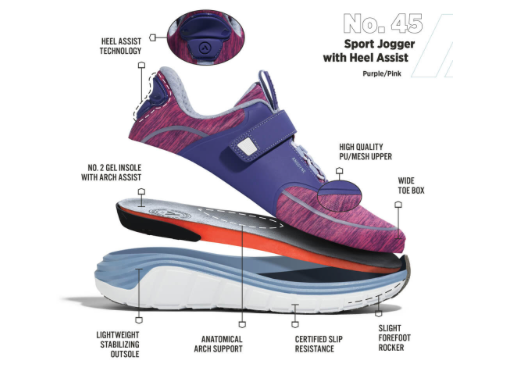
Anodyne was founded on the premise that therapeutic shoes should look like shoes people actually want to wear - not clinical devices they feel embarrassed to put on in public. Their catalog includes athletic/walking shoes, casual lace-ups, slip-ons, dress shoes, and sandals, all built to Medicare's A5500 diabetic shoe specifications with:
- No. 2 gel insole with arch assist - cushioning and support in a single removable layer
- Wide toe box - eliminates forefoot compression, critical for bunions, hammertoes, and neuropathic feet
- Slight forefoot rocker - reduces peak pressure during push-off, cutting shear forces on the ball of the foot
- Anatomical arch support built into the outsole
- High-quality PU/mesh upper - breathable, flexible, and seamless against the skin
- Heel assist technology for rearfoot stability
- Lightweight stabilizing outsole with certified slip resistance
You can browse Anodyne's full diabetic shoe collection to get a sense of the styles available before your appointment. Dr. Golan will evaluate your foot and confirm which models are appropriate for your specific shape, deformity pattern, and activity level - not every style suits every foot, and fit matters more than aesthetics.
⚠️ Important: Medicare covers diabetic shoes once per calendar year
Your benefit resets every January 1. If you haven't used it yet this year, now is the time - unused benefits don't roll over, and there's no partial credit for waiting.
Patients who have previously been prescribed diabetic shoes - and rejected them because they looked institutional - are consistently surprised by the Anodyne options. The difference is entirely interior: the seamless lining, the depth, the insert system, and the pressure-relieving sole geometry. Outside, they look like any modern athletic or casual shoe.
Compliance matters enormously in diabetic footwear. A shoe a patient won't wear because it looks or feels wrong provides no protection. Anodyne's combination of clinical function and genuine style significantly improves the likelihood that patients wear their therapeutic shoes consistently - every day, all day - which is when the protection actually accrues.
The Fitting Process at Vertex Podiatry
Prescribing diabetic shoes is not simply selecting a size from a catalog. Dr. Golan conducts a full foot evaluation before making any recommendation:
- Monofilament testing to quantify loss of protective sensation and identify which areas of the foot are at highest risk
- Vascular assessment to evaluate circulation and healing capacity
- Foot structure evaluation - identifying bony prominences, deformities (bunions, hammertoes, Charcot changes), and pressure distribution patterns
- Gait analysis to understand how the foot loads during walking and where shear forces concentrate
Based on this evaluation, Dr. Golan selects the appropriate Anodyne model for the patient's specific foot shape, deformity pattern, and activity level. The prescription includes the shoe model, size, width, and the appropriate insert - either a prefabricated diabetic insert or a custom-molded orthotic for patients with more complex biomechanical needs.
The completed prescription is then submitted to Medicare and the patient's secondary insurance. Dr. Golan's office handles the prior authorization and billing - patients are informed of any expected out-of-pocket costs before committing to anything.
When to Ask About Diabetic Shoes
If you have diabetes - Type 1 or Type 2 - and you have not been evaluated for therapeutic footwear, this is worth raising at your next appointment. Specific situations where diabetic shoes should be prioritized:
- You have been diagnosed with peripheral neuropathy at any stage
- You have had a foot ulcer in the past, even if it healed completely
- You notice calluses forming repeatedly in the same location
- Your feet swell throughout the day
- You have bunions, hammertoes, or other structural deformities that make regular shoes uncomfortable
- You have had any part of a toe or foot removed
- Your A1C has been elevated for several years, even without current symptoms
Prevention is the most powerful tool in diabetic foot care. By the time a foot ulcer develops, the situation is already a medical event requiring active management. The goal of therapeutic footwear is to prevent the ulcer from occurring in the first place - and Medicare's annual shoe benefit is specifically designed to make that prevention accessible and affordable.
Getting Evaluated at Vertex Podiatry in Columbus
Vertex Podiatry is located at 1500 W 3rd Ave, Suite 120, in Grandview Heights - convenient to patients from Upper Arlington, Clintonville, Dublin, Hilliard, Westerville, and across the Columbus metro area. Dr. Golan sees diabetic patients for comprehensive foot evaluations, annual exams, ulcer care, and therapeutic footwear prescriptions.
If you have diabetes and have not used your Medicare shoe benefit this year, call us at (614) 328-5561 or schedule online. We will verify your eligibility, conduct a full foot evaluation, and help you choose the Anodyne shoe that fits your foot and your life - not just your medical file.
In my practice, I see the consequences of diabetic foot neglect regularly - and footwear is almost always part of the story. A patient with neuropathy who wears a regular shoe with an interior seam gets a blister they can't feel, which becomes an ulcer, which becomes an infection. The right shoe eliminates that chain of events before it starts. What I tell every patient with diabetes: this is a Medicare benefit you are already paying for. Use it. - Dr. Guy Golan, DPM
Dr. Guy Golan, DPM
Founder, Vertex Podiatry
This article is for educational purposes only and does not constitute medical advice. Always consult a qualified podiatric physician for diagnosis and treatment of foot and ankle conditions.

Founder, Vertex Podiatry · Grandview Heights, Columbus, OH
Dr. Golan completed a three-year podiatric surgical residency at a Level 1 Trauma Center and brings advanced training in minimally invasive surgery, regenerative medicine, and comprehensive foot and ankle care to patients in Columbus and Central Ohio. All articles are reviewed for clinical accuracy before publication.
Meet Dr. GolanReady to Get Expert Care?
Schedule an appointment at Vertex Podiatry in Grandview Heights, Columbus.


